
Workplace safety reporting is often treated as an administrative burden. It is complex, time consuming, and disconnected from the systems teams actually use to manage incidents.
We see it differently.
After conversations with customers, one theme became clear. OSHA reporting should not live outside your workflow. It should be embedded directly into it. So we prioritized a new set of capabilities designed to make OSHA compliance a natural outcome of good operational practices, not a separate exercise.
Our team has spent time reviewing the government OSHA regulations, talking to customers. Today, we are rolling out the first phase of fully integrated OSHA reporting inside AdmiralBridge.
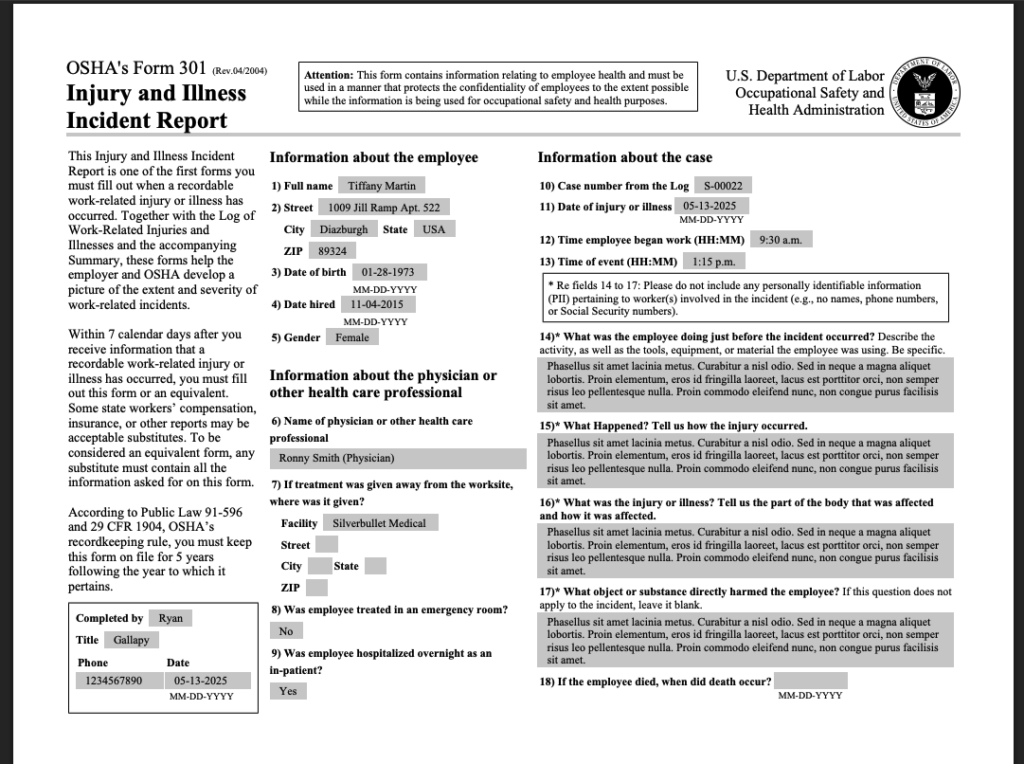
Your injury record is now the single source of truth.
We have expanded the individual injury form to include all required OSHA 301 fields. This means there is no duplication, no manual transfer of information, and no risk of missing critical details when it matters most.
Once completed, the OSHA 301 can be generated instantly from the record.
This approach ensures that compliance is not something you go back and assemble later. It is created in real time as part of your process. One of the biggest risks in OSHA reporting is incomplete or inconsistent data.

To solve this, we introduced a validation component that actively reviews each injury record and highlights what is missing. Instead of discovering gaps at the end of the process, your team is guided in real time.
Critical and non-critical items are clearly separated, making it easy to prioritize what needs attention. The result is cleaner data, faster submissions, and greater confidence in your reporting.

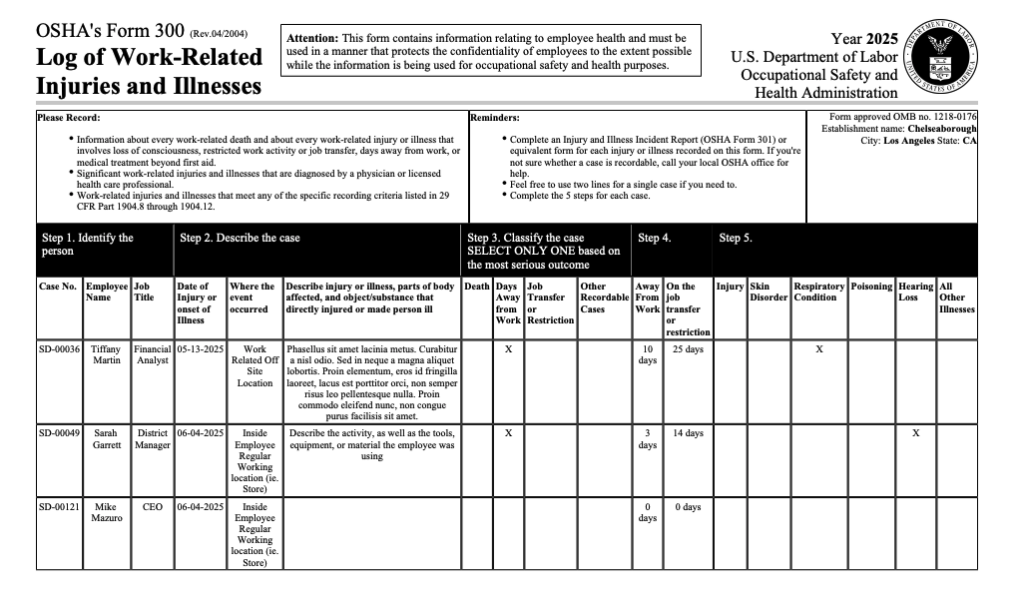
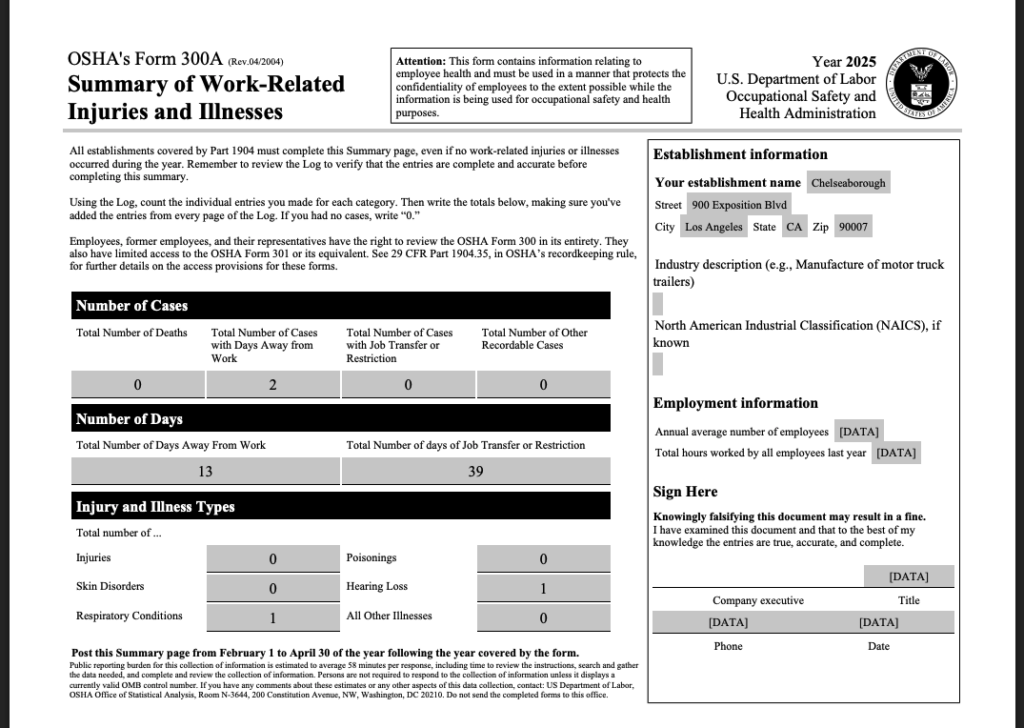
Generate OSHA 300 and 300A in seconds
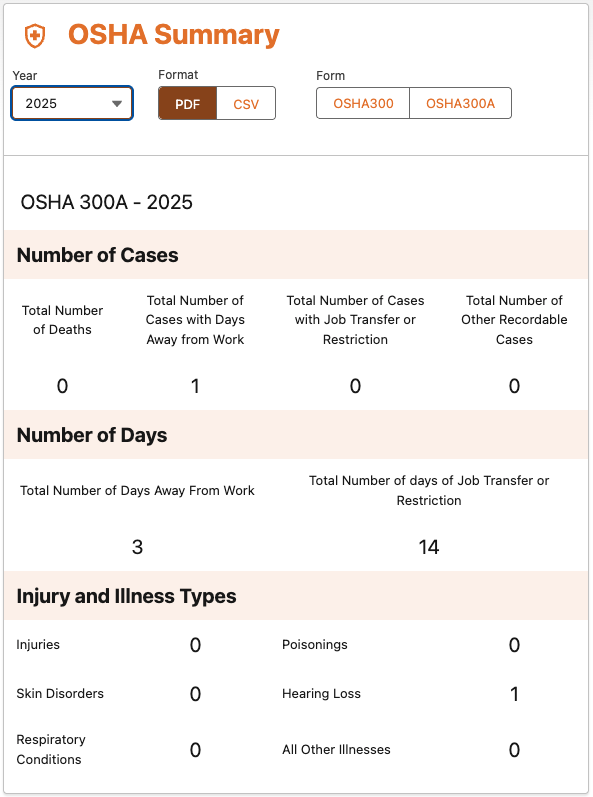
We have also introduced a new component at the location level that provides immediate visibility into your OSHA 300A.
Users can view year-to-date performance or switch between prior years to understand trends over time. This creates a clearer picture of safety performance without needing to compile reports manually.
Instead of static reporting, you now have a living view of your data.From the same interface, users can generate both the OSHA 300 log and 300A summary in either PDF or CSV format.
This flexibility allows your team to meet regulatory requirements while also making it easier to share and analyze data internally.
What used to take hours now takes seconds.
Built with customers, not assumptions
This release was shaped directly by customer conversations. It reflects a broader philosophy of building tecnology that actually serves people. The best compliance tools are not built in isolation. They are built alongside the people who use them every day.
There is more to come, but this is an important step toward a fully integrated safety and compliance experience.
What this means for your team
By embedding OSHA reporting directly into your workflows, you can:
- Reduce manual effort and duplicate data entry
- Improve data quality and completeness
- Gain real-time visibility into safety performance
- Generate required reports instantly
Compliance becomes simpler, faster, and more reliable.
If you are interested in learning more about how we are simplifying case and incident management contact us to set up some time to connect.